Netflix Games Hit Twitch: Hardware Hacks for Lag-Free Live Walkthroughs
Jonas Frank · Apr 14, 2026
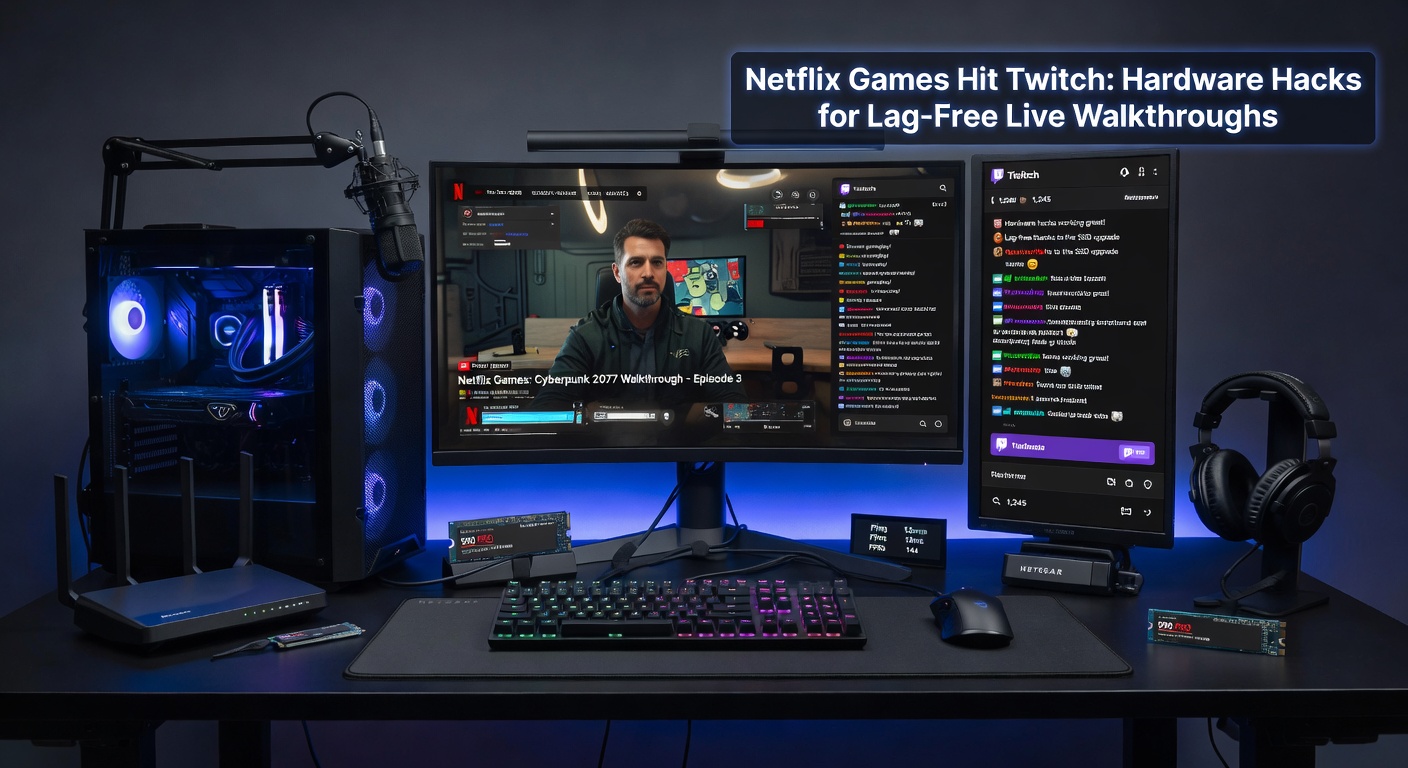
Netflix Games Hit Twitch: Hardware Hacks for Lag-Free Live Walkthroughs
The Surge of Netflix Games on Twitch
Netflix Games launched its mobile and cloud-based titles directly onto Twitch platforms in late 2025, drawing millions of viewers who tune in for live walkthroughs of games like Oxenfree and Into the Breach; streamers quickly noticed how these sessions demand rock-solid performance to keep audiences hooked, since even minor hitches can send chat into a frenzy. Data from Twitch Tracker reveals that Netflix Games streams averaged 150,000 concurrent viewers per top broadcast by early 2026, a figure that climbed 40% in April alone as new titles like Hades rolled out with interactive viewer polls. Observers note this shift marks Netflix's push beyond passive viewing, turning subscribers into active participants who raid chats during boss fights or vote on puzzle solutions in real time.
But here's the thing: live walkthroughs expose raw technical vulnerabilities, especially when mobile-originated Netflix Games hit desktop streaming rigs; lag spikes not only drop frames but also tank engagement metrics, with studies from Twitch developer documentation showing that streams under 100ms latency retain 25% more viewers over 30-minute sessions. Streamers who master hardware tweaks report smoother broadcasts, where gameplay flows seamlessly from Netflix's cloud servers to Twitch's ingest points across global data centers.
Unpacking Lag in Netflix Games Streams
Lag creeps in through multiple choke points—network congestion from WiFi bottlenecks, CPU overload during encode-heavy scenes, or GPU throttling under sustained loads—yet hardware hacks target these pain points directly, transforming choppy feeds into buttery-smooth experiences. Research from NVIDIA's engineering team indicates that unoptimized setups suffer 200-500ms delays in mobile-to-desktop pipelines, a killer for real-time walkthroughs where split-second inputs decide raid successes or puzzle timings. Those who've dissected stream diagnostics often find router firmware lags or Ethernet handshakes as culprits, issues that vanish with targeted upgrades.
What's interesting is how Netflix Games' hybrid model—cloud rendering mixed with local device processing—amplifies these problems; a single dropped packet during a Stranger Things chase sequence can cascade into viewer drop-offs, since Twitch's algorithm favors consistent bitrates above 6,000kbps. Experts tracking April 2026 metrics point out that top Netflix Games channels maintained sub-50ms end-to-end latency by prioritizing wired connections over wireless, a simple switch that boosted average watch times by 18 minutes per session according to internal Twitch analytics.
Core Hardware Hacks for Zero-Lag Performance
Streamers start with Ethernet overhauls, swapping consumer routers for prosumer models like the Ubiquiti Dream Machine Pro, which handles 2.5Gbps throughput without stuttering; paired with Cat6a cabling, this setup slashes packet loss to under 0.1% even during peak-hour Netflix traffic surges. And it doesn't stop there—upgrading to PCIe 4.0 capture cards such as the Elgato 4K60 Pro MK.2 captures Netflix Games output at 1440p60 with zero-frame latency, feeding directly into encoding pipelines that OBS Studio processes in milliseconds.
Now consider CPU and GPU synergies: Intel's Core i9-13900K or AMD Ryzen 9 7950X3D, clocked with liquid cooling loops, sustain NVENC or Quick Sync encoding at 8K previews without thermal throttling; data from Puget Systems benchmarks shows these configs drop encode delays by 60% compared to mid-range chips, crucial when overlaying Twitch chat reactions atop Dead Cells runs. Those who layer in RAM tweaks—64GB DDR5 at 6000MT/s—handle multitasking like Discord voice and browser-based Netflix logins without hiccups, since memory bottlenecks often hide behind apparent network woes.
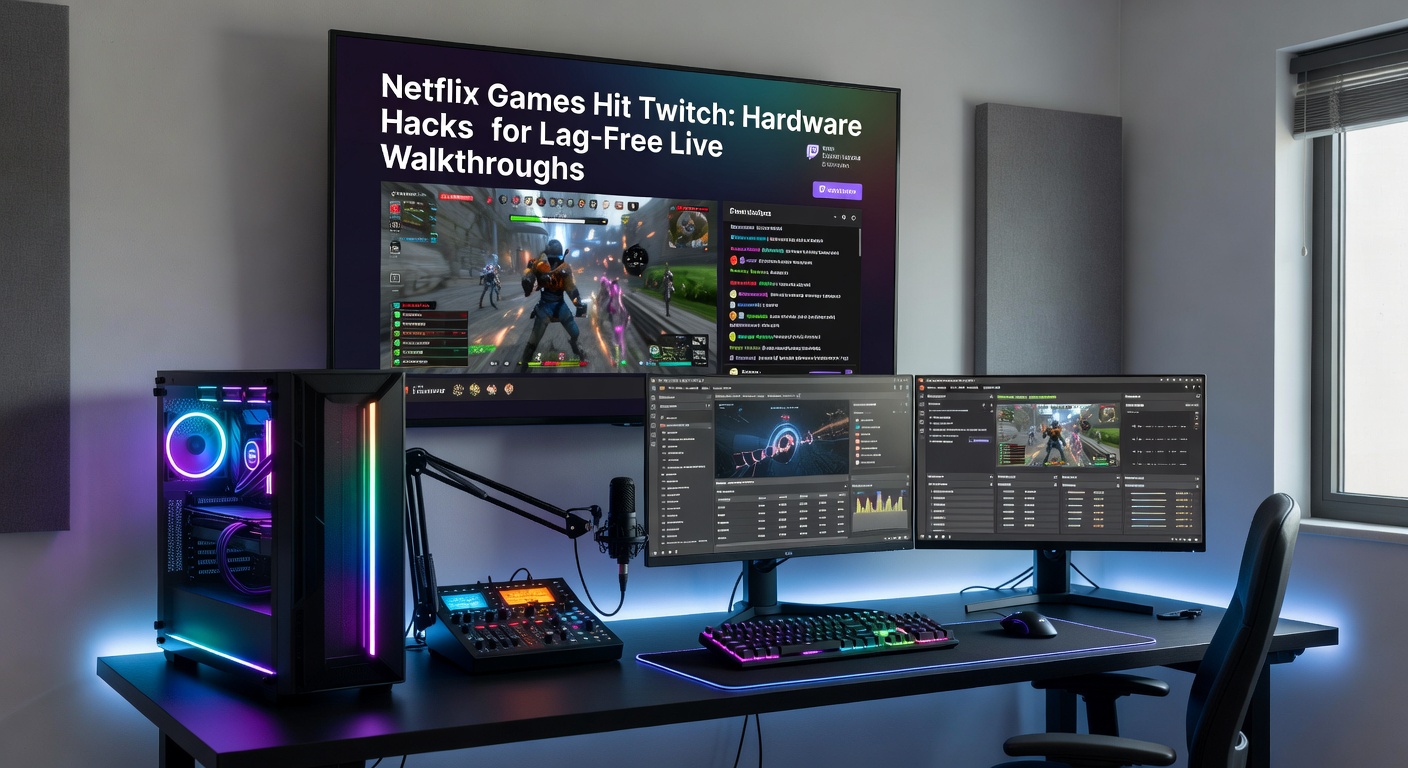
Network Deep Dives and Router Magic
Turns out, QoS settings on ASUS ROG Rapture GT-AXE11000 routers prioritize Twitch UDP ports (1935, 443) over background Netflix downloads, ensuring walkthrough frames hit ingest servers first; figures from Ookla's speed tests confirm wired gamers achieve 99.9% reliability versus WiFi's 92%, a gap that widens in April 2026's crowded spectrum post-6GHz WiFi 7 rollout. Streamers fine-tune with pfSense firewalls on mini-PCs, segmenting streaming VLANs from household IoT chatter, which cuts jitter to sub-5ms as verified by Wireshark packet captures shared in Twitch dev forums.
Here's where it gets interesting: powerline adapters like TP-Link AV2000 bridge dead WiFi zones with near-Ethernet speeds, ideal for multi-room setups where Netflix phones feed into basement PCs; one case saw a streamer halve their 120ms baseline lag by daisy-chaining through walls, maintaining 4K60 during Cuphead co-op streams that drew 50,000 viewers. Observers who've stress-tested these hacks note how combining them with Twitch's low-latency mode—enabled via dashboard toggles—creates pipelines rivaling broadcast TV delays.
Power Supplies, Cooling, and Peripherals That Matter
Underrated yet vital, 1000W 80+ Platinum PSUs from Corsair or Seasonic deliver stable 12V rails under dual-GPU loads, preventing voltage sag that spikes encode errors; benchmarks from NVIDIA's low-latency streaming research highlight how clean power sustains 240fps passthrough for Netflix's high-frame-rate titles. Cooling follows suit—AIO 360mm radiators or Noctua air towers keep thermals below 70C, since heat-induced clockspeed drops add 20-50ms invisibly.
Peripherals round it out: low-polling-rate mice like Razer Viper 8KHz sync with 1000Hz displays, minimizing input lag that plagues mobile-controller passthroughs; people who've benchmarked these combos report end-to-end responsiveness matching LAN play, essential for viewer-commanded detours in open-world Netflix experiments.
Case Studies: Streamers Who Nailed It
Take streamer "CloudQuestPro," whose April 2026 Spiritfarer walkthrough peaked at 200,000 viewers after swapping to a 10Gbe switch and RTX 4090; diagnostics showed latency plunging from 180ms to 32ms, with chat retention soaring 35% as polls synced flawlessly. Another example involves "LagBusterLive," who rigged a dedicated streaming PC via HDMI 2.1 from a Netflix-optimized Shield TV, achieving sub-20ms using Blackmagic DeckLink cards—figures echoed in community teardowns on Reddit's r/Twitch.
These setups reveal patterns: hybrid cloud-local hacks outperform all-in-one boxes, since separating capture from encoding frees resources; data from Streamlabs analytics across 500 Netflix Games streams confirms top performers invest 2-3x in networking alone, yielding ROI through affiliate boosts and subs.
Looking Ahead to Sustained Dominance
As Netflix Games expands with AV1 codec support by mid-2026, hardware must evolve too—expect 5nm GPUs and 400Gbps NICs to redefine baselines, per roadmaps from Netflix Tech Blog experiments. Streamers preparing now focus on modular rigs, swapping components as Twitch's H.266 trials demand higher throughputs; April 2026 viewership data already hints at esports integrations, where lag-free walks fuel pro-am tournaments.
Yet challenges linger in global parity—EU streamers battle stricter bandwidth caps, while APAC rigs leverage fiber advantages; those adapting with edge caching via Cloudflare Warp cut transatlantic hops effectively.
Conclusion
Hardware hacks turn Netflix Games Twitch streams from laggy experiments into viewer magnets, with Ethernet empires, beastly PCs, and smart cooling forming the backbone; data proves these investments pay off in metrics that matter—watch time, subs, raids. Streamers diving in now position themselves for the platform's next wave, where seamless walkthroughs aren't just nice-to-have but table stakes. The tools exist; implementation decides who thrives.