Coordinating Competitive Broadcasts Around Evolving Game Updates
Henrik Reed · Nov 10, 2026
Coordinating Competitive Broadcasts Around Evolving Game Updates
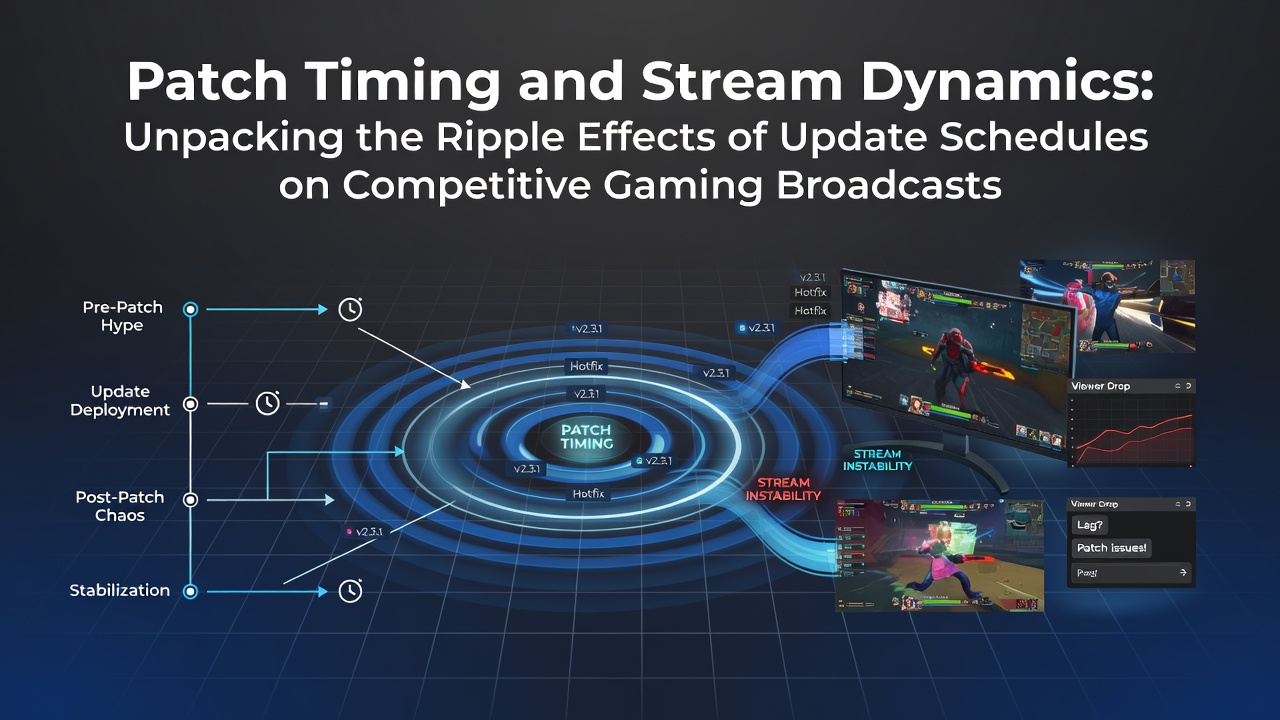
Game developers release patches on fixed cycles that directly alter competitive titles, and broadcast teams must adjust their planning to match those releases. Data from industry reports shows that major updates in titles like League of Legends and Valorant occur every two to four weeks, forcing producers to recalibrate schedules, commentator assignments, and technical setups within short windows. Observers note that when a patch drops mid-week, teams often shift live coverage to later evenings or add pre-show analysis segments to incorporate the changes.
Meta Shifts and Real-Time Commentary Adjustments
Balance changes in patches redefine character viability and strategy options, which means commentators prepare fresh talking points on short notice. Researchers at the University of California, Irvine documented how professional casters in North American leagues review patch notes within hours of deployment, then rehearse revised scripts to maintain accuracy during matches. Production crews test new in-game elements on secondary streams to verify camera angles and overlay compatibility before the main broadcast begins, and this process reduces on-air errors when unexpected interactions appear.
Scheduling Pressures During Peak Tournament Windows
Tournament organizers align events with patch timelines to avoid broadcasting unstable versions, yet last-minute hotfixes can still interrupt plans. In November 2026, several regional circuits postponed qualifiers after a stability patch introduced new bugs that affected server performance across multiple regions. Broadcast directors responded by extending practice lobbies and inserting filler content such as player interviews, which kept audiences engaged while engineers verified stability. External data from the Entertainment Software Association indicates that viewer retention drops an average of 12 percent when technical interruptions exceed fifteen minutes, prompting teams to build buffer segments into their run-of-show documents.
Coordinators also track global time zones because patches released from studios in Asia reach Western servers at different hours, creating staggered rollout effects. European leagues often schedule early-morning briefings to review overnight changes, whereas North American crews receive updates during afternoon prep sessions. This staggered flow requires shared cloud-based note systems so that commentary teams on separate continents reference identical information.

Audience Response Patterns and Platform Algorithms
Viewer metrics shift when patches emphasize new playstyles, and recommendation engines on major platforms amplify streams that feature those styles first. Figures from the International Game Developers Association reveal that highlight clips showcasing freshly buffed characters receive 30 percent more algorithmic promotion in the first 48 hours after a patch. Streamers who adapt quickly therefore gain temporary visibility advantages, while those who stick to pre-patch lineups experience slower growth until they incorporate the changes.
Production teams monitor chat volume and concurrent viewer graphs in real time to decide whether to extend post-match discussions or transition to the next segment. When a patch creates dominant strategies, engagement spikes occur during the initial discovery phase, then plateau once teams standardize responses. Analysts at the European Games Developer Federation tracked similar patterns across multiple MOBAs and found that patch-related content sustains elevated interest for roughly five days before baseline levels return.
Technical Integration and Overlay Updates
Graphics packages and stat overlays require immediate revisions after patches because new items or abilities appear in matches. Developers supply API endpoints that allow broadcast software to pull updated values automatically, yet manual verification remains necessary to catch edge cases. One production group in the Asia-Pacific region implemented automated alerts that flag any stat discrepancy larger than five percent, cutting response time from hours to minutes during live events.
Audio engineers also adjust sound design when patches alter ability volumes or add new voice lines, ensuring commentary remains intelligible over the revised effects. These layered preparations occur alongside standard broadcast tasks, which increases workload during compressed update windows.
Conclusion
Patch timing continues to shape every layer of competitive gaming broadcasts from pre-production research through post-event analysis. Teams that maintain flexible workflows and cross-regional communication channels adapt more smoothly to the cadence developers set. As update frequency remains consistent across major titles, production practices evolve in parallel to preserve broadcast quality and audience connection.